
What is the 300mm pool barrier rule for cold plunges in Queensland?
Under Queensland's Building Act 1975, any pool, spa or cold plunge capable of holding water deeper than 300mm is treated as a "regulated pool". That classification triggers the same safety barrier requirements applied to backyard swimming pools: a compliant fence or isolation barrier, a self-closing and self-latching gate, and in most cases a final safety certificate from a licensed pool safety inspector before the plunge can be used, or before a property with one installed can be sold or leased.
The 300mm is measured from the base to the water line when the plunge is filled for actual use, not the outside height of the tub or the depth marked on a spec sheet. Some portable or inflatable plunges are marketed as barrier-free because they sit shallow. A fixed tub built for genuine cold-water immersion almost never does.
Why 300mm and not some other number?
The figure isn't unique to cold plunges. It comes from the broader national framework written for backyard swimming pools, built around the depth regulators judged a young child could not reliably stand up in or climb out of unaided. Because a plunge holds the same hazard, the same clause of the Building Act applies, regardless of whether the seller markets it as a wellness product rather than a pool.
This is the part a brochure leaves out. A product page can call a plunge "compact home wellness" all day long, but the law measures the water, not the marketing. If you are comparing plunges on price alone, ask what the filled depth actually is before you compare anything else.
Does a cold plunge like Plunge Cedar trigger the rule?
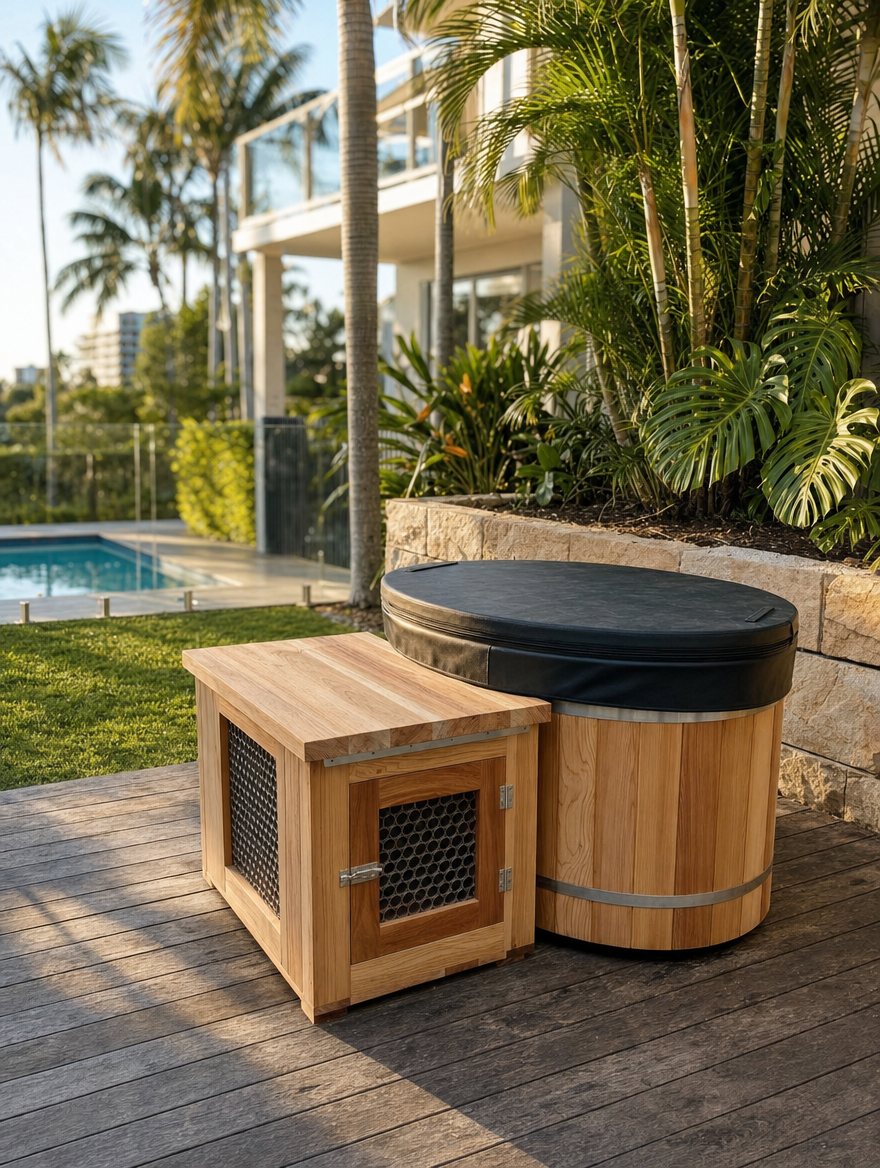
Plunge Cedar is a two-person cedar tub with a stainless steel liner, an insulated cover and a built-in chiller that holds the water at around 4 degrees C, priced at $5,000 inc. installation, plus delivery. It measures 1570mm long, 1070mm wide and 710mm high. At that tub height, the water level sits well past the 300mm line once filled to a usable immersion depth, so treat it as a regulated pool unless your specific fill level and a licensed inspector tell you otherwise.
Do the maths yourself. If a plunge holds you to chest or waist height for a proper 4 degree immersion, it is nowhere near 300mm of water. A tub shallow enough to dodge the rule usually isn't deep enough to do the job it's sold for. This is true of most fixed two-person cold plunges on the market, cedar or otherwise. Shallow is the exception in genuine cold-immersion products, not the norm.
What barrier compliance actually involves
A regulated pool classification means you need a physical barrier, whether that's standalone fencing or the building itself used as part of the barrier, meeting the non-climbable zone and self-closing, self-latching gate standards set out in the Queensland regulation. No climbable furniture, pot plants or structures can sit within the non-climbable zone around the barrier.
Before first use, and again at any point of sale or lease, the barrier generally needs sign-off from a licensed pool safety inspector registered on the QBCC pool safety register. Certificates aren't a one-off cost either: they need renewal on a cycle, typically every two years for a standalone home and every year for a shared complex. Budget it like council rates, not a set-and-forget line item.
What happens if you install a plunge without checking
Skip the barrier check and a council can issue a non-compliance notice, which usually means retrofitting the barrier at greater cost and disruption than building it in from day one. Selling or leasing a property with an unregistered regulated pool creates disclosure problems too.
For short-stay hosts, this matters more, not less. An uninsured or non-compliant plunge sitting next to a deck full of paying guests is exactly the kind of thing an insurer looks for a reason to decline a claim over. If you're weighing wellness amenities against the numbers on a listing, see the data on what guests actually pay for on the short-stay owners page before you add anything to a property you can't legally certify.
The question to ask before you pay a deposit
Ask any seller directly: "What is the actual water depth when this is filled for use, and does that put it over the 300mm regulated-pool line in Queensland?" If they can't answer plainly, that's your answer. Get it in writing, then call your local council's building department yourself, because interpretation can vary slightly by area and the call costs nothing.
This applies equally to any plunge sold by Dune Living. Ask us for it in writing too. No supplier's word should be the last check on a compliance question that sits with the council, not the seller.
What we don't know either
We can't tell you the exact barrier design your specific site will need. That depends on your existing fence line, deck layout, access points and your local council's interpretation, all of which vary. This article is general information, not a certificate. Get a site-specific assessment from a licensed pool safety inspector before you build or buy, and treat any generic answer, including this one, as a starting point rather than the final word.
Frequently asked questions
Do all cold plunges need a fence in Queensland?
Only if the water depth exceeds 300mm when filled for use. Most fixed cold plunges built deep enough for genuine cold immersion cross that line, so check yours specifically rather than assuming.
What is a licensed pool safety inspector and where do I find one?
A pool safety inspector is licensed and registered with the QBCC to assess and certify regulated pools against Queensland barrier standards. Search the QBCC pool safety register to find a licensed inspector near you.
Does the 300mm rule apply to indoor cold plunges too?
Yes. The depth trigger applies whether the plunge sits indoors or outdoors. Some indoor setups can use parts of the building as the barrier, but the pool classification and certification requirement still apply.
How much does pool barrier compliance cost for a cold plunge?
It depends on your existing fencing, deck layout and site. Get a fixed quote from a licensed installer for any barrier work, and a separate quote from a pool safety inspector for certification, before you commit to a plunge.
Can I put a cold plunge on a deck without a separate fence?
Sometimes, if the existing deck edge and any gates already meet the non-climbable and self-latching standards. A licensed inspector needs to confirm this against your actual layout, not a general assumption.
Does a cold plunge need its own certificate if there's already a fenced pool?
If the plunge sits fully inside an existing compliant pool barrier and creates no new unsupervised access point, a separate barrier may not be required. Confirm this with your local council before assuming it.
Is the 300mm rule the same everywhere in Australia?
No. Barrier depth triggers and certification cycles are set state by state. This article covers Queensland's Building Act requirement specifically; other states use different thresholds and processes.
General information only. Figures quoted are measured on Gold Coast and South East Queensland short-stay listings and are not a promise of what any one property will earn. Nothing here is tax, insurance or building advice; check with your accountant, your insurer and your local council.